How to Write a Book With No Experience in 10 Steps

Making the decision to learn to write book may be both thrilling and intimidating, especially if you have never done it before. But the great thing about writing and storytelling is that anyone with a tale to tell or information to impart can use it. Your voice should be heard, regardless of whether it is motivated by an original idea, a profound realization, or a personal tale. In order to assist you in writing without any prior writing expertise and publishing your first book, we have put together a comprehensive tutorial. Let’s get started.

10 Effective Steps for Book Writing for Beginners

Prose and self-publishing your first book is a unique experience that transforms your thoughts into powerful prose that people can read. The procedure can also appear overwhelming to a contract writer without previous expertise. However, all of us can overcome the obstacles of publishing our paintings in the event that we take a methodical technique. Here’s the way to begin making your thoughts a truth.

1. Being aware of your motivations

The first and most crucial step in your freelance writing path is determining why you want to create a book. Consider the main reason you want to create and publish a book. Does it stem from a desire to impart knowledge? Tell a personal story? Make your imagined world come to life. Knowing your “why” gives you focus and perseverance, which keeps you writing through the complex parts, with the published work being an even bigger reward.

2. Establishing reasonable objectives

Setting attainable goals is one method to reduce the overwhelming feeling of writing a book. Establish unique goals, such as word counts every day, chapter completion closing dates, and ordinary schedules. Your undertaking will seem much less daunting if you divide it up into little, plausible duties. This will also help you stay on track as you figure in the direction of your dreams and whole your paintings.

3. Identifying the different angles to your ebook

There are lots of recent books and authors inside the publishing enterprise, which isn’t any mystery. Your novel needs to, therefore, be precise. You can set your work aside from others in the equal class by arising with a unique slant or standpoint. This will be a unique putting, a unique narrative voice, or a sparkling take on a well-known issue. To attract and preserve the eye of destiny readers, you have to perceive what makes your e-book unique.

4. Researching your situation

Doing research is an essential part of giving your book writing depth and authenticity, whether you are writing fiction or nonfiction. Make use of a variety of resources, along with scholarly publications, number one files, interviews, and other pertinent fabric. Good research gives your story credibility and provides the reader with an entire experience.

5. begin writing.

For dozens of aspiring writers, the most challenging aspect is simply getting started. Don’t stress over getting it right the first time. Just give attention to writing down your thoughts. Set quick, daily content writing dreams and publish them somewhere you will see them every day to help you overcome the creator’s block. Remember that each initial variation is edited; the essential aspect is to keep going.

6. Establishing a writing schedule

Being constant is the best way to be effective in most undertakings, including writing your book. Determine when you write best and set up a comfortable space. Your brain will begin to be trained to recognize that you are writing in this setting. Writing becomes a habit when you are consistent, which helps you control your procrastination and keep going.

7. The process of revision

The first step in improving your creative writing is revision. When revising, take a critical approach to your draft and search for methods to enhance its flow, clarity, and structure. Seek input from dependable peers and be willing to make significant adjustments. Keep in mind that effective writing involves revision.

8. Looking for a skilled editor

Professional editing helps even the most successful and seasoned independent writers. From broad analysis to specific grammatical changes, editors offer priceless insights into your writing. By ensuring that your manuscript is logical and readable, hiring a professional editor can improve its quality.

9. Creating your book’s design

The first aspect you word whilst surfing a bookstore for a brand new e-book is the quilt. We can attest from personal enjoyment that your e-book’s visible enchantment is essential to drawing readers in. A nicely-designed book not only appears higher but additionally improves readability and the overall reader revels. This may be completed by investing in an expert layout for your cowl, design, and typography.

10. Book formatting

Making sure your e-book is formatted efficiently ensures that it meets the enterprise requirements of publishers and distribution channels. Whether you’re growing print books, e-books, or audiobooks, it is essential to recognize the statistics. A range of gear and services are available to help you format your work correctly for each medium.

Some Important Mistakes To Note If You Are Writing Book First Time

Like everything else, writing has its own set of difficulties, particularly for beginning authors. The quality of your final manuscript and your writing can each be more substantial by understanding a way to write a book whilst avoiding some of the everyday errors you can make. Here is a summary of common mistakes made at each degree of the writing manner, alongside recommendations on how to prevent them.

Getting started without a plan

Plot inconsistencies and structural issues may arise later because many novice writers start their work without a clear plan or blueprint. Spend a lot of time drafting a thorough outline before you begin writing to avoid this. Your narrative will be guided by this road map, which will ultimately assist you in staying consistent and focused throughout your journey.

Ignoring the research

Research is necessary to establish authenticity and plausibility, even in fictitious works. Inaccuracies resulting from a lack of research might divert readers’ attention or remove them from the narrative. In order to improve the believability and depth of your story, steer clear of this by doing deliberate, in-depth research on any subjects, locales, or historical aspects that are discussed in your book.

Ignoring your intended audience

Writing without a clear concept of your target audience can result in a piece that either fails to connect to many readers or falls flat. Prevent this by figuring out your target market early on and adjusting your language, fashion, and content material to shape their tastes and requirements.

Ignoring the revisions

Although it can be tempting to view your first draft as the finished product, doing so may result in a book that is not up to grade. You may avoid this by considering the revision process as a necessary component of writing. To improve and polish your narrative, go through several drafts.

Ignoring the editing process

Spelling, grammar, and punctuation mistakes can lessen the percentage of professionalism and readability of your work and, once more, pull the reader out of the narrative. To prevent this, spend money on expert editing services to make sure your book is flawless. For your manuscript, BookBaby provides proofreading, line editing, and copy editing.

The following Steps Are For Distribution And Publication.

The important choice of how to publish and distribute your work will come up after you’ve finished the demanding but gratifying process of writing and editing a manuscript. Your control over your work, how you market it, and your potential earnings can all be greatly impacted by your decision to self-publish or go through a traditional publishing method.

Self-publication:

Pros:

Total command:

Every element of their book, including the cover art, content, pricing, and marketing tactics, is in the authors’ exclusive control.

Increased royalties:

Authors can keep a bigger percentage of their revenues without a traditional publisher, which can be very profitable if the book does well.

Quickness of market entry:

Compared to traditional methods, self-publishing usually enables a quicker publication process, allowing authors to reach readers with their book sooner.

Cons:

Initial expenses:

Depending on the self-publishing path they take, authors are responsible for paying for editing, design, marketing, and distribution.

Marketing duties:

When an author decides to learn how to self-publish a book, they might be the only one responsible for marketing and promotion.

Conventional Publishing:

Pros:

Distribution and marketing:

The reach and visibility of the book can be increased by using the vast distribution networks and marketing know-how of established publishers.

Credibility

An author’s career may benefit from credibility and reputation that come with having a book published by a reputable publisher.

Cons:

Reduced artistic authority:

The final look of the book and, occasionally, its content are beyond the authors’ control.

Reduced royalties:

Because the publication process is more expensive in traditional publishing, royalties per book sold are smaller.

Slow procedure:

It can take a long time—often a year or longer—from manuscript approval to book release.

How An Experts In Ebook Writing May Assist

Ebook Writing Experts provides a full range of services aimed at making the process of publishing a book easier for authors who are inclined to self-publish. For authors that self-publish, we serve as a one-stop shop, offering expert services like:

Book printing services:

Offering quick turnaround times, reasonable prices, and excellent printing at our in-house printing facility;

Book editing services:

Making sure your manuscript is flawless and error-free;

Cover design and formatting:

Giving your book a polished, unique look and feel that fits your genre and personal style;

Worldwide distribution:

Giving you access to big-box stores like Amazon, Barnes & Noble, and Apple Books; and print-on-demand services that do away with the need for large upfront print runs.

Marketing services:

Offering resources and services to help you market your ebook correctly, consisting of promotional materials, social media advertising and marketing, and more.
What is an Extended Metaphor | Extended Metaphor Example?

Writers utilize a variety of terms and themes in literature to make their work approachable and imaginative for the audience. One literary device used to improve writing is the metaphor.

Metaphor is usually used to describe an action or object that is not real but aids in comparison and idea explanation. Poetry and other literary works frequently employ this kind of metaphor, which is a typical metaphor. This is a straightforward metaphor, but are you familiar with the extended metaphor?

The elaborated version of a simple or regular metaphor that extends across multiple sentences or even the full text is called an extended metaphor.

In this blog, let’s find out the extended metaphor’s meaning and its examples by the greatest classic poets, and explore much more about an extended metaphor.

What is an Extended Metaphor?

An extended Metaphor is a form of literature that is used to describe any object or actions to make a comparison to the length of the literature, allowing the deeper exploration of the comparison.

This type of metaphor unfolds across multiple sentences and even paragraphs, using numerous interrelated metaphors within an overarching one. For example, “Life is the journey” is a metaphor, and “Life is a journey that takes us through green pastures, vast deserts, and rocky mountains” is an extended metaphor.

Structure of Extended Metaphor

Extended Metaphor has the same structure as the regular metaphor. It has two components

  • Tenor (Concept being described)
  • Vehicle (The object used for comparison)
Tenor

Tenor refers to the subject or concept described in the metaphor. Essentially, it is the main idea that the metaphor is trying to convey.

For example

Her love is a rose.

In the above line, love is the tenor as it is the thing that is being described.

Vehicle

Vehicle refers to the thing that represents the tenor. In simple words, it is the figurative language that describes the tenor.

For example

Her love is a rose.

In the above line, the rose is the vehicle as it represents the condition of the love.

Examples of Extended Metaphors

Classic poets use Extended metaphors in their poetry, songs, and plays. Here are a few examples:

Romeo and Juliet By William Shakespeare

It is the East, and Juliet is the sun!

Arise, fair sun, and kill the envious moon,

Who is already sick and pale with grief

That thou her maid art far more fair than she.

Be not her maid, since she is envious.

Her vestal livery is but sick and green,

And none but fools do wear it.

In this example, William Shakespeare has written the most prominent extended metaphor. In this scene, Romeo compares the beauty of Juliet with the sun and her radiance with the moon. Shakespeare compares her beauty with the moon and later he says “Kill the envious moon” which means Juliet’s beauty is enough to suppress the others. Poet extends the metaphor by saying Juliet is “a maid of the moon” which points towards the virginity of Juliet and comparing her to a maid means she should part her virginity. Shakespeare wrote these lines to show Romeo’s intense love and admiration for Juliet at first sight.

The Road Not Taken By Robert Frost

Two roads diverged in a yellow wood,

And sorry I could not travel to both

And be one traveler, long I stood

And looked down one as far as I could

To where it bent in the undergrowth;

In the famous poem by Robert Frost, the division of the road or “the fork in the road” is the extended metaphor. This metaphor represents the significance of decision-making in human lives, with each road symbolizing the possible choices one could make. In the poem, the poet uses the extended metaphor to convey that unknown roads provide personal growth and new experiences.

As You Like It By William Shakespeare

JAQUES: All the world’s a stage,

And all the men and women merely players.

They have their exits and their entrances,

And one man in his time plays many parts,

His acts being seven ages. At first, the infant,

Mewling and puking in the nurse’s arms….

…Last scene of all,

That ends this strange eventful history,

Is second childishness and mere oblivion,

Sans teeth, sans eyes, sans taste, sans everything.

The first line of the play became quite famous because of the extended metaphor that poet used. However, this line was just the beginning of the extended paragraph that later was followed by several sentences. This extended metaphor was developed by using figurative language, actors, and parts. The metaphor begins with the line “All the world’s a stage” and then it continues with the details of the different stages like infancy, old age, and death. By using the extended metaphor, Shakespeare compares life to the theatrical play, highlighting the roles people play throughout their lives.

In Hope is the Thing With The Feathers

Hope” is the thing with feathers –

That perches in the soul –

And sings the tune without the words –

And never stops – at all –

In this poem, poetess Emily Dickinson compares hope with a bird that lives in the human’s body by using the extended metaphor. She says that hope is the name of a feeling that “perches” through the soul and stays always there. Using the extended metaphor, Emily compares human hope to that of a bird, stating that just as a bird remains resilient even under the most difficult circumstances, similarly human hope remains intact during trying times. This poem encourages the readers to see hope as a valuable part of themselves and make the most out of it.

Martin Luther King’s “I Have a Dream” Speech

The speech of Martin Luther King is famous for powerful language and skillful usage of the extended metaphor to illustrate the difficulties of civil right moments and his dream of equality. He used the metaphor “ the promissory note” to talk about the promise of freedom that was not kept. In addition, he also mentions a metaphor “ a valley of despair” to describe the challenging life of Black Americans. To describe his imagination of a world free of racism, he used the metaphor “an oasis of freedom”. He also imagines the “symphony of brotherhood” where people of all colors and cultures can live without any discrimination. King delivered this speech at the Lincoln Memorial in 1963 and to connect with the wider audience including Black and White Americans, he cleverly used extended metaphors. These comparisons helped people from all walks of life to understand the struggle for equal rights.

How Can You Write Extended Metaphor?

To write a perfect and catchy extended metaphor, you need to meet specific criteria. Look at the rules in more detail.

Consider it’s Important

Understand why it is essential to write an extended metaphor to explain your idea. Plus, you also need to ensure that what you’re explaining through the extended metaphor is truly important enough to warrant the detailed explanation.

Make it Interesting

The next thing that you need to ensure while writing an extended metaphor is that it should be interesting. If your extended metaphor is not interesting, it will bore your readers.

Make it Clear

Last but not least, your extended metaphor should be clear enough to help your readers understand the complex concepts better.

Simile vs. Metaphor: What’s the Difference

Simile and metaphor are both figures of speech that are used to compare two things that are not alike. However, there are a few things that make these two different from each other. Let’s have a look:

Simile

A simile is a way of comparing two things by using the words “like” and “as.”In other words, simile is an indirect comparison. For example, “ her eyes were like stars.”

Metaphor

The metaphor refers to directly stating that one thing is another thing without using the “like” or “as” words to make the comparison. For example, “Her eyes were stars.”

Wrapping up

Using extended metaphors can improve your writing and increase its impact. Many great writers employed this fantastic approach to capture their readers’ attention. Writing an extended metaphor may appear tough at first, but with practice and the criteria provided, you will be able to write a clear and intriguing extended metaphor like the other great writers.

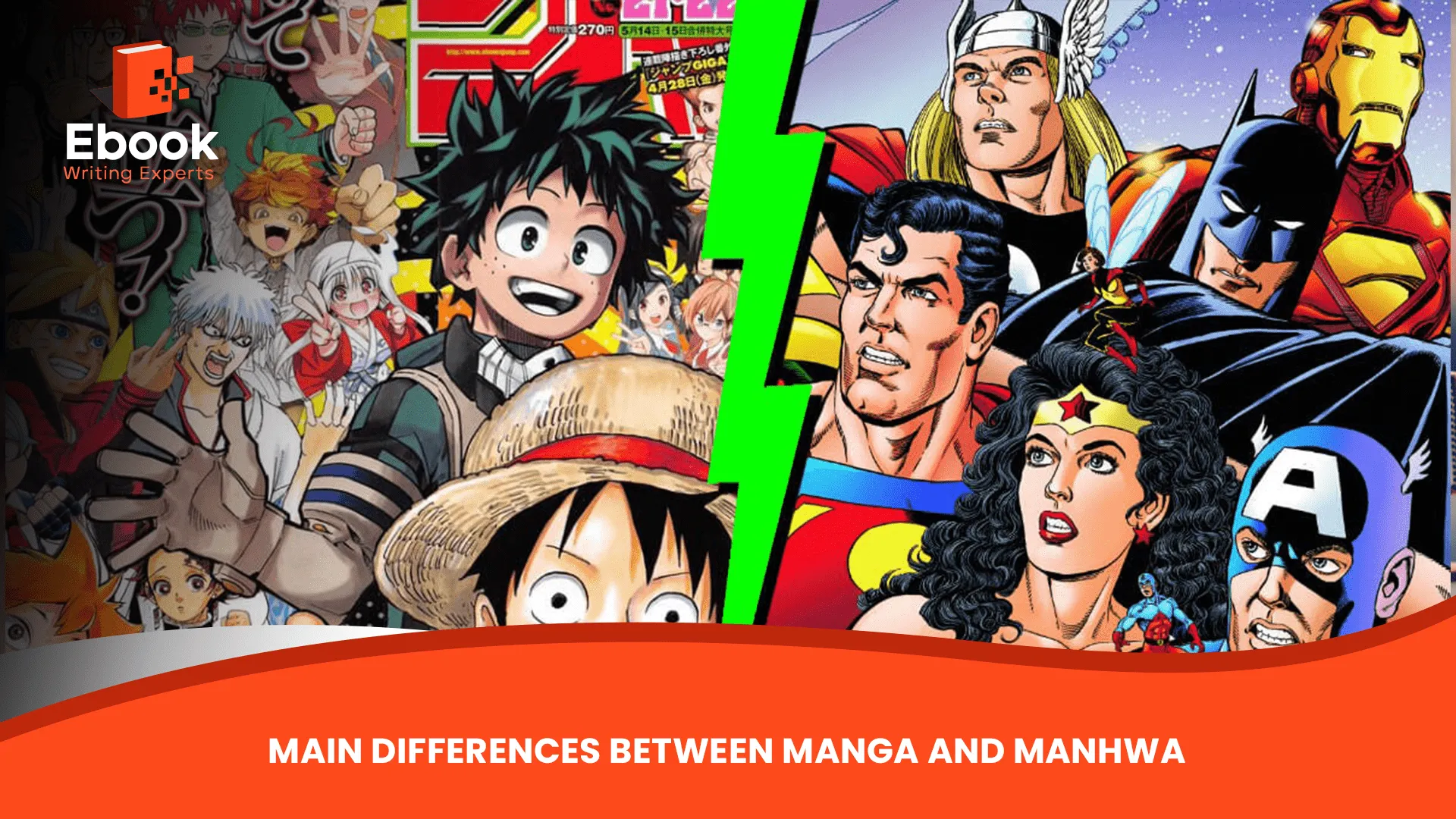
Main Differences Between Manga and Manhwa

In the world of comics, there’s always an endless battle between the famous comics manga and manhwa. Because of their quite similar names, fans usually grouped them. However, these both have unique features and characteristics.

Both comics are world-famous and they share some similarities, but also have differences in terms of styles, storytelling, and readership.

In this blog, let’s explore more about your favorite comics and find out how they stand out from each other. So, keep reading to find out the difference between manga and manhwa.

Key Differences Between Manga and Manhwa

What is Manga?

Before diving into the similarities and differences, let’s find out what is meant by manga.

Manga is a Japanese comic that consists of a broad range of genres from romance, sci-fi, mystery, horror, history, comedy, detective, and many more. Right now, it is the most famous and adored comic of the time. As per the reports, in 2023, there were more manga sold than any other novel or comic in the United States.

History of Manga

While talking about the history of this great comic, we have to trace it back to 1945. After the end of World War II, post-war Japan witnessed an immense boom in creativity. We can say that creativity was in full force in those days.

Osamu Tekuza took charge and established the foundation of manga in Japan. The revolution he brought in the world of art and creativity, earned him the title of “The Father of Manga”. He wrote and released some of the most famous manga series, including the Astro Boy.

Style and Structure of Manga

Manga is published in black and white worldwide and is read from right to left. It is typically published in weekly magazines and countless genres. It’s versatlity in genres has made it the most adored and popular comic in the world.

Here are some famous manga series that are loved by everyone:

Shonen Manga

Shonen Manga was written for adolescent boys. It involves inciting incidents and often explores the themes of action and adventure. In most shonen series, the main character has to fight with an evil power and express their tenacity and strength through different adventures. Many shonen works including The Tokyo Ghoul and The Hero Academia got anime series.

Shojo Manga

Shojo manga is written for adolescent girls. This genre focuses on the emotional growth instead of the action or adventure. Many people link it with the romantic genre, because of its romantic titles, but that’s not the case for the entire genre.

Josei Manga

This genre is generally written for adult females. Usually, Josei comic’s stories are based on the themes of emotional turmoil, and romance. Josei manga deals with emotional conflict rather than physical.

Tremendous Influence of Manga

No matter the type, manga has a major influence on the world of reading. It has become more than an expression of post-war creativity, in fact, it has become a main aspect of Japan’s identity. Students and teachers are specifically trained in schools and colleges to write manga.

There’s no doubt that manga has become a phenomenon. Even if you’re not a fan of manga, you still have encountered it somewhere in your life.

What is Manhwa?

In general, manhwa is the Korean term for comics and graphics. As opposed to the manga’s black and white style, manhwa is fully colored and it is read from left to right format. While it doesn’t have the variety of genres like manga, its incredibly drawn and written scenes are what make it different. There’s a great emphasis o on the execution of the action, the motion involved in it, and the impact that each strike has. The main difference between manga and manhwa, there are fewer conversations in manhwa as artists focus on using action rather than talking.

History of Manhwa

The history of manhwa traced back to 1910-1945, when Korea was occupied by Japan. It was the time when Japan’s influence increased on comics and cartoons. As a result, eventually manhwa began to form slowly. Initially, it was based on political themes, due to which it was banned by the government. Much of the manhwa was viewed as problematic by the government and they actively tried to suppress it. Because of this uphill battle, manhwa did not grow popular until the 21st century.

Digital Evolution – Webtoons

Manhwa faced censorship for a long period, but now it is taking the world by storm. Now these Korean comics can be seen everywhere, thanks to the latest technologies, such as smartphones. In 2004, a website called Webtoons was launched by Korea to release manhwa digitally.

Major Themes of Manhwa

Whether enjoyed digitally or in print, manhwa typically explores three main themes.

The first one is murium manhwa which deals with the coinciding world. These stories dive into the hidden or underground realm, often dealing with the martial arts.

Manhwa stories also revolve around a fantasy world, where magical elements dominate the story.

In addition to that manhwa also share the unique “slice of life stories.” Slice-of-life stories usually deal with the fundamental aspects of daily life and give the message that it’s not important to pursue a bigger dream or an extraordinary task, sometimes the most important thing is to find peace in the fulfillment of the mundane.

Manga vs Manhwa

Origins

Manga is a Japanese comic and manhwa belongs to South Korea. Manga became popular in the 20s, while manhwa saw a massive decline due to government censorship.

Layouts

Manga and manhwa also have different layouts. Manga is always published in black and white while modern manhwa is published in color form and horizontally, similarly to the English and American comics. Moreover, manga is read from right to left and manhwas is read from left to right, depending upon where it is written.

Art Styles

Manga is illustrated colorless, its characters are shown in the black and white theme, and it has stylized and dramatic-looking characters. Whereas, manhwa is illustrated in color form and has more realistic characters.

Writing Style

Stories in manga are divided into short chapters and these are published in daily magazines. While manhwa does not have any divisions in volumes, it is written as an individual and a complete work.

Background Settings

Manga and manhwa both have realistic background settings, but in digital manhwa, the background settings are rather simpler.

Onomatopoeia

Manga uses a unique set of onomatopoeia to describe the sounds and inanimate objects as well as represent the psychological states and emotions. In contrast, manhwa has its own set of onomatopoeia. Even digital manhwa often uses music and sound beats to express emotions.

A Blur Line Between the Manga and Manhwa

Despite having many differences, it is hard to distinguish between manga and manhwa. Especially when it comes to art and storytelling, both are forms of South Asian comics with overlapping influence, making them quite similar at many times. Yet, there is a blur line that makes them different from each other. Both works are almost similar yet tell different tales, and have different cultural essence and narrative approaches that make them captivating in their own right.

Final Thoughts

While manga and manhwa are similar in some ways, the unique differences between manga and manhwa set them apart. The evolution of these comics and the different techniques of storytelling make these comics, an important part of South Asian culture.

Every artistic piece has its importance. Similarly, manga and manhwa are loved by people worldwide. Both mediums have their way of appeal the readers and they will continue to captivate hearts with unique storytelling and diverse characters. Whether you prefer the digital convenience of manhwa or the classic appeal of manga, each has its special and incredible way of storytelling, that will continue to evolve and inspire the world.

How Many Chapters in a Book | How Many Words Are in a Chapter

One of the most famous questions that rises while writing or reading a book is connected to its structure. What number of parts does it contain? How long should each chapter be? These are significant viewpoints for authors, readers, and even publishers to be thoughtful. While there is no size-fits-all response to the number of chapters in a book or the ideal word count for a chapter, thoughtful the typical structures can provide supportive guidance.

In this article, we will research the number of chapters a book usually has, the number of words in a chapter, and how these variables influence the reading and writing experience. We must distinguish the restraints and research what authors and readers need to be acquainted with, the number of sections in a novel, and the word count per chapter.

How Many Chapters in a Book?

One of the main things a writer thinks about while starting a book is the number of parts it should have. While this number can differ significantly contingent on the type, style, and purpose of the book, greatest books classically fall within an exact reach.

The Average Number of Chapters in a Book

The average number of chapters in a book can range from 10 to 40, contingent on its length. Shorter novels or novellas might have 10 to 15 sections, while longer books often have 20 to 30 parts. Epic novels or books in series can have many more chapters.

For example:

  • A short novel (20,000 to 40,000 words) could have around 10 to 15 chapters.
  • A standard novel (50,000 to 100,000 words) might have between 15 to 30 chapters.
  • Epic fantasy novels or long authentic fiction books (north of 100,000 words) can have 30 to 40 chapters or considerably more.

Remember, the number of chapters isn’t fixed. A few novels could include curiously few parts. Still, they are significantly longer than expected, while different books could have a considerable number of chapters yet be relatively short in word count.

Why Do Chapters Matter?

Chapters are something other than a method for separating a book. They are tools that assist with putting together the story, maintaining pacing, and providing the reader with a feeling of progress. Chapters permit authors to:

  • Create natural breaks in the narrative.
  • Control the pacing by focusing on one plot point or event at a time.
  • Shift perspectives or locations, especially in books with multiple viewpoints.
  • Provide pauses that allow the reader to reflect on the story and anticipate what’s coming next.

Chapters likewise give readers a feeling of achievement as they finish each one, which is especially helpful while reading an enormous book. Knowing the number of chapters in a book can provide a reader with a sense of how much is left to read, causing the book to feel more manageable.

How Many Words Are in a Chapter?

The length of a chapter plays a critical part in the pacing of a story. The number of words in a chapter relies upon the author’s style and the general structure of the book. However, there are typical word count runs that most authors stick to while deciding how long a part should be.

Chapters likewise give readers a feeling of success as they complete each one, which is especially helpful while reading an enormous book. Knowing the number of chapters in a book can provide a reader with a sense of how much is left to read, causing the book to typical word count runs that most authors stick to while deciding how long a part should be

Typical Word Count per Chapter

While the number of words in a chapter can change, most parts fall within a specific range. Here are a few overall principles:

  • Short chapters: Classically, short chapters range from 1,000 to 2,500 words. These chapters are frequently used in high-speed classes like thrillers, where the goal is to preserve pressure and keep the reader curved.
  • Medium-length chapters: Many novels have chapters that are around 2,500 to 4,000 words. These chapters are watched as regular in length and give an enjoyable balance between feature and readability.
  • Long chapters: A few authors may relax on longer chapters of 4,000 to 6,000 words or more. This is mutual in intellectual fiction, historical fiction, or epic-inspirational books where there is more understanding, world-building, or numerous subplots to research inside every part.

Factors Influencing Chapter Length

The length of a chapter is mainly inclined by numerous factors, including:

  • Genres: Fast-paced genres like thrillers, mysteries, and activity-oriented fiction usually have more incomplete chapters to continue with the pace. Then again, academic fiction or historical novels may comprise more lengthy parts to research characters and settings more carefully.
  • Narrative structure: A book with various perspectives or alternating timelines might have more limited chapters to isolate the multiple storylines. In contrast, a single-character narrative could consider more extended parts as the story grows all the more slowly.
  • Author’s style: A few authors usually write longer or more limited parts in view of their narrative style. For example, a few authors might prefer speedy, punchy sections to keep the story moving, while others might make more broad parts loaded up with rich details.
  • Reader expectations: Some types, such as young grown-up or children’s fiction, will frequently have more imperfect chapters since they are attentive to younger readers or readers thorough for brighter, more edible content.

How Many Words Are in a Chapter in Terms of Storytelling?

From a storytelling viewpoint, the number of words in a chapter plays an important part in how the story is explained. Every chapter is a smaller-than-expected story in itself, with its bend. In the event that a part is excessively lengthy, it could feel like a trudge for the reader, and the pacing of the book could suffer. Then again, if the chapters are too short, the reader may feel like they are looking excessively fast, starting with one scene and then onto the next, which can upset the progression of the narrative.

The ideal word count for a chapter frequently balances the requirement for detailed storytelling with the desire to keep the reader engaged. For instance, chapters that are around 2,500 to 4,000 words are considered enough to improve the plot, character, and setting without dragging or feeling overly hurried.

How Many Chapters in a Novel?

A typical novel generally has between 15 and 30 chapters, contingent upon the general length and intricacy of the story. This is valid for the majority of traditional novels in various classifications, like academic fiction, romance, and historical fiction.

However, the number of chapters can vary widely. For example:

  • Novellas (shorter novels) could have 10 or fewer chapters. Novellas tend to focus on a single event or theme and consequently don’t need as numerous chapters for their narrative.
  • Epics or long fantasy novels can have 40 or more chapters, particularly when they have different characters or subplots.
  • Young adult novels and middle-grade fiction will generally have more limited chapters (frequently 2,000 to 3,000 words) and could fall toward the lower end of the chapter count range (around 10 to 20 chapters).

The Function of Chapters in a Novel

Chapters serve many purposes in a novel:

  • Organizing the narrative: A chapter typically covers a specific event or turning point in the story, creating the plot easier to follow.
  • Creating suspense: Authors can use chapter breaks to make uncertainty or cliffhangers, inspiring the reader to retain turning pages.
  • Allowing for a shift in perspective or setting: Chapters offer a usual change from one viewpoint to another in novels with numerous characters or timelines.

Determining the Number of Chapters in a Book

While it’s attractive to look at the ideal number of chapters or words in a chapter, it’s vital to comprehend that there are no compound guidelines. The story decrees how many chapters should be in a book. Here are few considerations for authors:

  • Pacing: If your novel needs more room for plot growth, you might need more chapters. If it’s a fast-paced action story, you might choose for shorter chapters to keep the impetus going.
  • Subplots and Character Development: If your novel has numerous subplots or attentions on character development, you may essentially have more chapters to guarantee each plotline gets its due attention.
  • Reader Expectations: Different types have different expectations concerning chapter count. Romance novels might lean toward shorter chapters, while classic fantasy may need more chapters to allow for world-building and multifaceted plans.

Conclusion

Understanding the number of chapters in a book and the number of words in a chapter can significantly improve the writing and reading experience. While there’s no conclusive response, most books ordinarily have between 10 and 40 chapters, with every chapter containing 1,000 to 6,000 words. These chapter structures sort out the narrative, control pacing, and offer natural breaks that keep the reader engaged.

Finally, the number of chapters in a novel and the word count per chapter are not completely set in stone by the story’s requirements. Writers should focus on producing a structure that best serves their narrative, while readers can participate in the book’s normal recurrent pattern as they develop from chapter to chapter.

How Long Is a Short Story Length? Complete Guide

Short stories are highly condensed works of Fiction that can convey emotionally engaging characteristics or drama in less space than a novel. Novels may take you several sittings to read, but a short story can furnish you with all those wonderful escaped moments in a fine evening or even in a few minutes. Thus, these become happy bedtime stories for the parents, which they often read to their kids, sparking dreams and imaginations.

In this blog post, we’ll explore the length of short stories and why these tales deserve more attention. We’ll also answer common questions to better understand this unique art form and also talk about how you can write a short story.

What is the Length of a Short story?

As we have previously mentioned, a short story is an art of writing that one reads in a single sitting-most often in between twenty minutes to an hour. It has no upper limit, but for the majority, the short story length is between 1000 and 7500 words; its outliers can reach 10,000 or 15,000 words, respectively. Approximately 10-25 pages long, this makes short stories shorter than novels.

How Many Pages In a Short Story

The length of a short story is variable in measure, but a story usually ranges between 1,000 words and some 7,500 words, which gives about 3 to 30 pages, depending on the setting (font size, spacing, etc.). Short stories, by definition, are short; they tell complete tales without requiring lengthy chapters or digressing subplots. That makes for a quick and enriching reading experience.

How Many Words In a Short Story

The editor and writer of a well-known magazine, Brian A. Klems, gives advice about setting a word count for yourself when writing. Allow the narrative without interruption. Hold off on revising the initial draft until you have finished it to a manageable short tale length. For example, the British novelist Frank Arthur’s short fiction “Twenty Minutes with Mrs. Oakentubb” is about 4,000 words long.

Why is Word Count Important in a Short Story?

When you are a new writer, readers will judge you for your work. If they read your story and find the word count overwhelming, they will bounce back and not come back to reread your stories. They might think you are an ordinary person who does not understand the difference between the word count of a short story and a novel. For this reason, you should be mindful of the word count in your short stories.

Types of Short Stories and Their Word Counts

  • Micro Fiction (5 to 350-word count)
  • Flash Fiction (500 to 1000-word count)
  • Traditional Fiction (1500 to 5000-word count)

The Key Elements of a Short Story

Well, there is no secret formula to write a short story. However, a fresh and creative short story will have most of the following elements such as:

Protagonist with a certain Desire

It is very important for the protagonist to want something they do not have; otherwise, they will not move the story forward.

Clear Dilemma

We are mainly interested in how the protagonist resolves the challenge, so we don’t need much context to understand how it began.

Clear Decision

What does the protagonist do to resolve their difficulties?

Climax Time

The climax of a story is when the tension reaches its peak, and the reader discovers the outcome of the protagonist’s decisions regarding their dilemma.

Outcome

How does the climax change the protagonist? Do they have a distinct personality? Do they view life differently or have a distinct philosophy?

Without any doubt, short stories also utilize the elements of Fiction, such as a setting, plot, and point of view, which helps to study these elements and to understand their obstacles. However, when it comes to writing down the skeleton of a short story, the above elements are what you need to get started smartly.

We’ve discussed how many pages in a short story, its word count, and the short story length. Now, let’s talk about the steps an individual can take if they want to write a standout story.

How to Write a Story Short in 2025? Step-by-Step Guide

Writing a short narrative may appear to be a straightforward task—after all, it is short, right? Short stories, like any other genre of storytelling, require a precise, compelling storyline that has been carefully created. There are thousands of ways to write a creative short story, but below are some methods that have been tried and tested for writers of all levels.

Start with a Fresh Idea or Concept

The first step might seem obvious: you need fresh ideas because they are the seeds from which stories grow. You can help from anywhere, like life experiences, newspaper articles, or overheard conversations. But the question is, how do you translate that idea into a story concept?

Brainstorm

Set aside some time to let your thoughts. Write down any and all ideas that occur in your mind. No notion is too odd or too ordinary.

Consider Your Audience

Keep in mind that your story should ideally resonate with your target audience. Therefore, think about their likes, dislikes, and interests, and then shape your idea.

Develop Concept

Once you have a brilliant idea, start putting them into paper. What is the setting? Who are the main characters? What’s the conflict? Etc.

Write Your First Draft

Once you have got your idea, now it is time to move towards the writing process. Here’s how you can write your first draft:

Start Anywhere

You don’t have to start at the beginning. Begin with the most memorable part of the story for you and work your way down.

Don’t Self-Edit

The first draft won’t be perfect. So, allow yourself to make mistakes, and do not panic if you write bad sentences. The first draft focuses on getting the tale out.

Write Regularly

Writing is like a different skill. You will not learn it in one day, and it will improve with practice, so you have to write on a daily basis. Set time every day to work on your story and give your best with each word or sentence you write.

Find Key Characters in Your Short Story

Once you complete your first draft, take a break and identify what you’ve written. Ask yourself:

  • Who are my characters?
  • What motivates them?
  • How do they change throughout the story?
  • What are the themes?
  • What bigger ideas is your story exploring?
  • How do these ideas tie into the plot?

Stories and Inciting Incidents

In storytelling, an inciting incident sets the main character on their journey. It is the spark that lights the story’s fuse. Consider Alice falling into the rabbit hole or Harry Potter receiving his Hogwarts letter.

Climaxes

Equally as important as the inciting incident. This is the moment when tensions reach their peak, and your story’s conflict is resolved. Your character will face their biggest challenge, and the results will bring closure to your story.

Refine Your Story’s Second Draft

Now it’s time to improve your work. This phase involves polishing your prose and refining your narrative. Below are some techniques you can use for impressive results:

Remove Fluff

Be professional with your editing. Cut every section that does not push the plot forward or develop your characters.

Improve Descriptions

Replace unclear language with specific, vibrant descriptions. This will help your audience better understand your story from start to end.

Check Consistency

Make sure that your characters and plot are consistent throughout the story.

Polish Your Manuscript

Lastly, polish your manuscript until it is good to go. Some key areas to focus on:

Style

Style represents the language you use in your story. It’s unique to every writer. So ask some questions such as:

  • Do you add short, choppy or long, flowing sentences?
  • Is your language descriptive or straightforward?

When you review your manuscript, consider your style and make sure it’s consistent.

Use Active Voice

Active voice makes your writing more direct and engaging and hooks your readers till the end.

Different sentence

Too many phrases with the same Length can make your work seem repetitive. So, change it up to keep your reader interested.

Voice

Your voice is the personality that shines through in your writing. It’s what makes your work uniquely yours. Therefore, while polishing your manuscript, consider the following:

  • Be authentic
  • Know your characters
  • Embrace imperfections

The Short Story Checklist

Below is a collection of practical short story writing tips by Ebook Writing Experts. Each section has its checklist item.

LENGTH

  • 1000-7500 words in Length
  • The story has one time period
  • Each scene has one location

PROSE

  • Your language is succinct.
  • Word choice is fresh and inviting.
  • You avoid clichés and platitudes

POINT OF VIEW

  • There is one POV per scene.

STRUCTURE

  • Your story follows the Act Structure.
  • You explore uncertainties
  • The structure has internal logic.

PROTAGONIST

  • Only one protagonist
  • The protagonist grows the most
  • Only one antagonist

INTEREST

  • Each sentence is Interesting.
  • Your story entertains the reader.
  • Start the story with a hook.
  • Use little expository prose.

CHARACTERS

  • Characters speak uniquely
  • The dialogue has subtext
  • They feel like real people

Final Words

Thus we have learned definitions of short stories, how many pages a short story should be, the Length of the short, some key elements, and how to write a best-selling short story in 2025. Normally, a short story averages from 9 to 13 pages with word counts anywhere between 1500 to 7000 words. You can sell your short stories books on popular magazines or Amazon Kindle.

Besides, if you have written a short story and want to polish your manuscript, you can contact Ebook Writing Experts. We have a team of professional editors who will complete your book and make it ready to publish.

How to Publish a Comic Book In 2025

A comic is a way of telling a story using pictures and words, usually in strips or frames. The pictures help show the story in order, much like how a movie works. Comics have been around for a long time, starting with things like cave drawings and ancient writings. Moreover, Comic books have many genres, and they were famous in those days when the internet wasn’t there.

However, some parents have complaints about their kids who own comic books, that they spend less time in their academic studies and more time reading comic books. So, if you want to become a best-selling author then you have to write your comic book to be interesting and attention-grabbing, which hooks the reader from start to end.

If you completed the hard part, like outlining your comic book, writing an amazing story, and putting the final touches but you do not know how to publish a comic book? Worry not. In this blog will discuss some best steps that will help you publish a comic book with ease.

Do People Still Love To Read Comic Books?

Video games are among the entertainment items that children indulge in, and besides, there are various online channels like Netflix and Amazon Prime through which children easily stream their favorite movies and shows, but still, many people do like to read comic books. Comics enthusiasts who were born during the time when the said genre was incredibly popular still enjoy it. So, if they get the content as amazing as they had back in those days, they would live to read.

4 Routes to Get a Comic Published

If you also want to know how to get a comic book published, then there are four ways along with their advantages and disadvantages.

Release A Webcomic

It is one of the best and easiest ways to publish a comic book. Many webcomics are much like what you would find in the daily or weekly newspaper, as opposed to the comic book. WEBTOON: Webtoons are similar to web based comic strips but arranged in a vertical rather than a horizontal manner.

Pro of Webcomics

Faster and simpler to publish than the traditional way.

It can build up a fan base faster because they are simple to share on social media platforms.

Con of Webcomics

There is a lot of competition, which makes it hard to stand out among readers.

Publish Your Comic Book Digitally

The alternate version of webcomic is a digital platform. Digital comics have probably never been more popular than now with an increase of e-readers and smartphone users. But there are also some amazing places to get your comic book published, like comiXology – which is owned by Amazon now. Amazon even has free software to help you get your comic book on Kindle.

Pro of Digital Comic

This is cheaper than a printed comic book

You Do not have to deal with the hassle of getting your book printed.

You Do not have to deal with the hassle of getting your book printed.

Readers can easily buy them at any time without any issue.

Con of Digital Comic

Lots of comic readers prefer to have a hard copy in hand, and if you do not print them, they may not read them.

Traditional Publishing Way

If you do not know how to get a comic book published, you can choose the traditional route and work with a professional book publishing service provider like Ebook Writing Experts.

Pros of Traditional Publishing Way

You receive support from your publisher and do not have to go through the comic book creation process alone.

Your publisher also covers the fees of producing your comic book.

Already, they’ve got people who handle distribution, meaning that the task of getting books into stores does not fall on you.

Con of Traditional Publishing Way

If you have an old idea, you may be unable to find the best publisher for your book.

Self-Publish Comic Book

It’s also possible for you to self-publish printed copies of your comic book. Self-publishing is the ideal way if you want higher royalties and more creative control.

Pro of Self-Publish

You provide a physical copy of your comic book for people who prefer it.

Many Comic book collectors prefer paper copies over digital versions.

Readers will support local retailers if your comic is available in shops.

Con of Self-Publish

Self-publishing a comic book can be costly and its cost varies with the length of your comic and how thick the paper is.

If potential customers do not purchase your printed copies, then they need to be stored somewhere else.

Team Behind Published Comic Book

Creating a comic book is a big project. Comic creators play different roles in making the books, and some writers hire professional agencies to fill those roles and tasks.WriterEditor IllustratorColorist Letterer FormatterPublicist

How to Get a Comic Published

We have discussed what comic books are, the 04 routes to publish them, and the team behind Published Comic Book. Now, it is time to see some of the amazing steps to publishing a comic book in 2025!

Create a Comic Book

Typically, a comic book has between thirty and fifty pages. On these pages, you need to add creative text and eye-catching images. Bubble speeches represent the dialogues and conversations between characters you have written. If you need to describe the plot, behaviors, history, and point of view related to any character, you can do this by writing the text on the page where it is very easy to read.

Think Out of the Box

If you want to make your book stand out in the market, remember not to use the same old types of comic book stories people have already read. Think out of the box, think creatively, and bring something new and fresh.

Target Audience

Before you think about how to get a comic book published, it is important to understand who you are writing for. Who is your target audience? When you know about the audience, then it’s time to market your book to the right consumers.

Write Creative Story

Blurb will recommend that you develop a story that clearly defines the topic of your comic book. After you write a story, you can put it into comic form. Comic books are all about pictured stories, so keep in mind that you not only have to create a catchy story but also think about the characters’ appearances, places, and dialogues between them. If you can not do it yourself, you can use our comic book writing service to turn your story into life.

Illustration

It plays an important role in comic books, so try to make them as amazing as you can. However, if it is not your cup of tea, then you can hire an expert who can draw impressive images for your comic book. Moreover, you can get help from a comic book cartoonist and tell them to refine your work if they require some editing or revision.

Color of your Comic Book

If you want to get a simple black-and-white comic book like in the good old days – it’s good, but if you are going to make it colorful – it’s the best idea. All you have to do is cram your head with some information and then determine what to do with that information. However, printing black-and-white is more affordable compared to a colourful one.

Publish your Comic Book

Now it’s time to know how to get a comic published. Once you complete writing and get it done by editors, it’s time to publish it and earn income from it. There are two ways to publish your comic book. You can publish it traditionally with big publishers. You can also self-publish your comic book on Amazon Kindle; it’s all up to you.

Sale your Book

You can sell your comic book on different websites.Amazon Kindle PublishingWebtoonTapa

Tips for Creating A Best-Selling Comic Book in 2025

Below are a few tips that help you create a popular comic book: Take Your Time Hire an Editor Get Your ISBN Check Your Formatting Don’t Forget to Include an Author Bio

If you still find it hard to write your book or do not know how to publish a comic book. Just visit our site, Ebook Writing Experts, fill out the order form, share your requirements, and leave the rest to us.

Final Word

In this blog, you have learned lots of things, from what a comic book is to how you can create or publish it in 2025. However, If you have already completed your comic book looking for how to get a comic published, you can use our Book publishing service. Our experts will take care of all the processes involved in book publishing at very affordable rates.

How Much Does a Book Cost | Book Pricing Guide 2024

Books have always been a source of data, entertainment, and inspiration. Whether you’re an excited reader or somebody looking to purchase a book for educational resolutions, one typical question emerges: How much does a book cost? This is more interesting to reply to than it might appear. Book costs generally depend upon various variables, like the kind of book, the format, the publisher, and the point of sale. In this comprehensive book pricing guide for 2025, we’ll break down the cost of various kinds of books and give knowledge into how books are not entirely determined, so you can better comprehend how much books cost today.

Understanding Book Prices

To understand the cost of a book, it’s essential to first comprehend the variables that impact book estimating. Below, we will look at a few of the principal components that add to the cost of books.

Book Format: Hardcover vs. Paperback vs. E-books

One of the most important basics of moving the average book price is the format of the book. There are some different formats available in the market, including hardcover, paperback, and digital (e-book). We should check out every one of these in more detail:

Hardcover Books

Hardcover books are generally the most costly format. These books are often made with the best quality materials, involving sturdy binding, tough covers, and defensive residue jackets. Then, hardcover books will, on average, cost between $20 and $35. Books by famous writers or new releases in hardcover might cost more, mostly if they accompany extraordinary highlights like marked editions or illustrations.

Paperback Books

Paperback books are usually cheaper than hardcovers because of the reduced making costs. The typical book cost for softcover books falls anywhere between $10 and $20. Mass-market paperbacks, often found in airport bookstores or stores, can be much less expensive, at times costing just $5 to $10.

E-books

Digital books are often the most affordable choice. With no physical creation or distribution costs, digital books can be valued as low as $0.99 for special deals or as high as $15 for recently delivered or exceptionally pursued titles. For instance, numerous self-published writers offer their works at lower costs to attract readers, while huge publishers might set greater costs for digital adaptations of bestsellers.

Genre and Target Audience

The type of book you are searching for can significantly impact how much books cost. For instance:

Textbooks and Educational Books

Academic textbooks and expert manuals are the absolute most costly books that anyone could hope to find. This is because they are usually loaded with particular information, exploration, and illustrations. Prices for textbooks can go from $50 to more than $200, contingent on the subject and level of study. Numerous reading materials likewise require regular updates, which can bring about more exorbitant costs for the latest versions.

Children’s Books

Children’s books, particularly those with illustrations, can fluctuate broadly in cost. Basic picture books cost around $8 to $15, while intuitive or hardcover children’s books can go for $20 or more. Books for more established children and youthful grown-ups will generally be closer to the value scope of grown-up softcover books, with prices averaging $10 to $20.

Specialty Books

Books that are rare, specialty, or gatherers’ items frequently have a much higher cost tag. First editions, signed duplicates, or no longer available books might be priced far higher than newer publications. These sorts of books might cost anywhere from $50 to $500 or more, contingent upon rarity and condition.

Self-Published Books

Books published by free writers frequently fall on the lower end of the pricing scale. Numerous self-published e-books are priced somewhere in the range of $0.99 to $5. However, softcover renditions can go from $10 to $20.

Publisher and Popularity

One more factor deciding how much a book costs is the publisher behind it. Huge, well-known book publishers frequently have more critical marketing budgets and distribution networks, which can drive up the cost of the book. Well-established writers with enormous followings may likewise order more significant costs for their books, especially in hardcover formats. New books from well-known writers are frequently estimated somewhere between $25 and $35, despite the fact that softcover forms might be cheaper in subsequent releases.

Smaller or independent publishers might charge more modestly for their books. These books are often more specialty, concentrated, or targeted toward explicit audiences. The typical book cost for books from free independent publishers is more reasonable, going from $12 to $20, particularly for paperbacks.

Book Length

The length of a book likewise impacts its cost. Longer books (commonly those exceeding 400 pages) are generally valued higher than shorter books since they require more paper, time, and resources to deliver. In any case, while more extensive books cost more in terms of creation, the value distinction may not be critical all of the time. For example, a 500-page hardcover novel could cost $25 to $40, while a more limited 300-page book in a comparable format might cost $15 to $25.

Where Are You Buying the Book?

One more important perspective to contemplate while understanding how much books cost is where you are purchasing them. Book costs can vary contingent on whether you are buying from a local bookstore, an online retailer, or a secondhand seller.

Independent Bookstores and Chain Stores: Book costs at nearby free bookshops and chain retailers, such as Barnes and Honorable, are often somewhat more advanced than whatever you’d see online. This is because physical stores need to take care of the expenses of running a physical area, and they might have different buying power than enormous online retailers. Hope to pay about $1 to $5 for books purchased in a physical store.

Online Retailers

Websites like Amazon, Book Storehouse, and other online retailers frequently have competitive pricing and limits, particularly for new deliveries and famous titles. With no above for physical stores, online book retailers might sell books at lower costs than nearby bookshops. This is frequently where you’ll find the best deals on books, including utilized or used books, which can additionally diminish the price.

Used Bookstores and Thrift Shops

Purchasing utilized books is a fantastic cash-saving tip. Many utilized bookshops and bookshops offer secondhand books at discounted costs, frequently going from $1 to $10 for more seasoned or less well-known titles. Websites like ThriftBooks and AbeBooks likewise offer a wide determination of secondhand books at reasonable costs, with limits of up to half of the original retail price.

Special Pricing and Discounts

For those thinking about how much books cost, it’s helpful to think about unique offers, discounts, and promotions that influence the cost of books. Numerous book stores offer deals consistently, particularly during particular seasons or exceptional events like the biggest shopping day of the year or World Book Day. Signing up for email newsletters or devotion programs with book retailers gives you access to limits and limited-time offers.

Book bundles, in which you can buy numerous books at a discounted rate, are likewise very famous. For instance, publishers or websites could offer a buy one, get one free, or sell books in limited groups, frequently decreasing the cost per book..

Conclusion: How Much Does a Book Cost?

The cost of a book is contingent on many fundamentals, from the book’s format to its kind, publisher, and where you get it. The average price for a hardcover book is between $20 and $30, while paperbacks strength be between $10 and $20. Digital books are classically the most affordable choice, with costs extending from $0.99 to $15.

If you are requesting how many books there are today, the cost will generally rely upon the type of book you are interested in and where you are purchasing it. For instance, textbooks, niche titles, and books from well-known writers might cost more than general fiction or independently published books. Furthermore, looking at online retailers, secondhand book shops, or exploiting deals can assist you in finding the best deals on your next read.

While budgeting for books in 2025, remember these factors so you can make informed choices and find the ideal choices that suit your necessities and your wallet.

30+ Funny Memes About Books: A Hilarious Look at Reading Culture

Books have a fantastic power, they can convey us to various worlds, introduce us to remarkable characters, and ignite our minds. Yet, can we just be real for a minute, they can likewise prompt a few pretty funny situations! Enter the domain of funny book memes. These amusing and frequently interesting images impeccably catch the high points and low points of being a book lover. We’ll research 30+ funny memes about books that will make them laugh uncontrollably, whether you’re a relaxed peruser or a meme.

1. The Overwhelmed Reader

Perhaps one of the most relatable funny memes about books includes an individual buried under a mountain of uninitiated books. This meme impeccably represents the struggle many of us face when our TBR (to-be-perused) mountain spirals out of control. The caption frequently says, “When you understand you have a larger number of books than time.” It’s a silly update that we often go overboard about our reading lists.

2. Book Hangovers

One more exemplary topic in amusing book images is the feared book hangover. This meme shows a person looking forlorn with the subtitle, “When you finish a book and don’t have the idea how to adapt.” It’s comical permission to the profound rollercoaster we frequently ride after completing an engaging story. We’ve all been there, lost in a fictional world, just to be shocked back to the real world.

3. The Bookworm Struggle

One especially entertaining reading meme includes a bibliophile attempting to peruse in a tumultuous environment. The caption states, “Me attempting to peruse with 100 interruptions.” This meme cleverly captures the struggle of setting aside the opportunity to understand when life disrupts the general flow. Whether it’s pets demanding consideration or companions needing to hang out, this meme resonates with each peruser who’s attempted to sneak in a few pages.

4. Book Recommendations

Have you at any point been asked for book recommendations just to freeze up? A funny meme about books captures this second impeccably, portraying an individual overpowered with decisions and saying, “What do you mean you haven’t perused [insert famous book]?!” It features the pressure of sharing our literary favorites and the implicit decision that a few books are simply “must-peruses.”

5. The E-Reader Dilemma

In the digital age, funny memes about reading books have likewise started to incorporate e-readers. One well-known meme shows somebody desperately attempting to find their charger, captioned, “When your e-reader dies, and you understand you’ve to remember what an actual book resembles.” This humorous interpretation of technology and pursuing reflects the pressure between conventional books and present-day comforts.

6. The Book vs. Movie Debate

Quite possibly one of the most persevering memes on books is the infamous book vs. movie debate. A meme frequently portrays two boards: one showing a peruser enthusiastically drenched in a book and the other appearing as a disordered moviegoer. The caption peruses, “When you understand the film doesn’t do the book justice.” This meme sounds valid for some who feel that adaptations frequently miss the mark regarding the source material.

7. The Book Lover’s Guilt

There’s nothing very like the responsibility of purchasing more books when you haven’t perused the last ten you bought. A funny meme about this present circumstance portrays an individual happily grasping books, with the caption, “Who needs to understand when you can simply gather?” This meme captures the duality of being a book darling, both the delight of obtaining new books and the guilt of not understanding them.

8. Fiction vs. Reality

Another engaging perusing meme features the difference between fictional people and genuine assumptions. A common format shows a superhuman from a book on one side and an individual attempting to get up on the other. The subtitle frequently peruses, “my thought process I’ll feel in the wake of completing a self-help book vs. how I feel.” It entertainingly epitomizes the gap between literary inspiration and day-to-day existence.

9. The Never-Ending Series

For fanatics of the series, a funny meme frequently outlines the disappointment of waiting for the following portion. The image normally includes a person looking restless, with the subtitle, “When the author takes excessively lengthy time to deliver the following book.” This meme impacts any individual who’s been left hanging after a cliffhanger.

10. The Bookish Identity Crisis

One of the more reflective funny book images features the character emergency numerous perusers face when they’ve gotten some information about their #1 book. A common meme portrays a person overreacting and saying, “I can’t pick only one!” This humorously reflects the profundity of our literary love and the struggle to pinpoint only one book that epitomizes everything.

11. The Cozy Reading Nook

Each book lover dreams for the ideal understanding niche, and one meme catches this dream beautifully. It shows a luxurious perusing space with the inscription, “My ideal reading corner vs. my genuine reality.” This meme entertainingly differentiates the Pinterest-ideal vision of perusing with the frequently cluttered reality.

12. The Librarian’s Life

A funny meme about books that frequently flows includes a custodian manipulating heaps of books. The inscription peruses, “When you love books yet, in addition, need to keep heaps a similarity to arrange.” It features the frequently chaotic life of the people who work with books every day and the struggle to offset enthusiasm with obligation.

13. The Bookshelf Envy

Each avid reader has encountered bookshelf envy. A famous meme shows an individual looking longingly at an overflowing, delightfully coordinated shelf with the inscription, “When you see somebody’s ideal bookshelf and acknowledge you’re utilizing a milk carton.” This humorous interpretation of our perusing surroundings features the yearning many need to make their fantasy understanding space.

14. The Bookish Friend

We as a whole have that one companion who suggests the most obscure books. A funny meme about this highlights a person rolling their eyes with the caption, “When your companion suggests a book you’ve never known about.” It makes fun of the occasionally pretentious nature of literary suggestions and the strain to stay aware of every new delivery.

15. The Bookish Vows

An especially funny reading meme catches the opinion many book darlings feel during heartfelt connections. It frequently includes a couple, with one individual saying, “I promise to cherish you like I love my books.” This clever wind on heartfelt commitments features the devotion book lovers have to their fictional interests.

16. The Serial Series Reader

A popular meme outlines the compulsion of spree-reading a series. It includes a person looking wild with the subtitle, “When you finish a book series and don’t have any idea how to work in the public eye any longer.” This is a relatable portrayal of the extraordinary emotional investment perusers frequently have in their number one series.

17. The Procrastination Dilemma

A classic meme about pursuing includes procrastination. It frequently shows an individual relaxing with a book, saying, “I should accomplish something useful, yet this book is calling out to me.” This funny take captures the timeless struggle among responsibilities and the charm of a decent pursuit.

18. The Bookworm’s Dilemma

A funny meme about books shows a person caught in a problem: “Do I start another book or finish the one I’ve previously started?” This reflects the mind-boggling nature of having an excessive number of books to peruse and the decision paralysis that can go with it.

19. The “Just One More Chapter” Trap

One of the most well-known perusing memes highlights somebody saying, “Only another part,” and afterward looking horrified as they understand it’s daybreak. This meme amusingly catches the endless pattern of perusing that many book sweethearts experience late into the night.

20. The Dog-Eared Pages

In the book local area, there’s in many cases debate about how to treat books. A funny meme shows a person looking scandalized with the subtitle, “When somebody canine ears a page.” This humorous take features the affection and care numerous perusers have for their books.

21. The Bookish Mood

A well-known meme frequently includes a person relaxing with a book, with the caption, “Me attempting to get into the right state of mind to peruse.” It amusingly depicts the struggle of setting the ideal environment for perusing, complete with tidbits and comfortable covers.

22. The Classic Book Trap

One funny meme portrays an individual endeavoring to pursue an exemplary novel yet looking completely confused. The subtitle peruses, “When you at last get that exemplary you’ve been important to peruse.” This meme catches the frequently thick and challenging nature of works of art that can deter even the most committed perusers.

23. The Midnight Reading Habit

A habit meme about pursuing showcases a person alert and ready to go at midnight, saying, “For what reason do I generally choose to begin another book at 2 AM?” It features the habit numerous perusers have of getting into new stories at the most inconvenient times.

24. The Bookish Regret

One especially engaging meme portrays an individual with a look of gloom, captioned, “When you finish a book and promptly regret your life decisions.” This entertainingly depicts the blend of fulfillment and misery that follows the determination of a holding read.

25. The Bookstore Addiction

For some, bookshops resemble candy shops. A funny meme catches this opinion with a person joyfully shouting, “Only another book!” as they grip a stack. It humorously reflects the enticement and delight of perusing bookshops.

26. The Spoiler Alert

A typical funny meme includes a person looking shocked, with the inscription, “When somebody ruins the consummation of the book you’re not kidding.” This meme reverberates with each peruser who has had their perusing experience ruined by a thoughtless remark.

27. The Audiobook Dilemma

In the time of audiobooks, one meme about books shows an individual listening intently, saying, “When you’re in fact ‘perusing,’ however you’re simply tuning in.” It humorously catches the cutting-edge problem of reading.

28. The Unfinished Books

A relatable meme features a person encompassed by incomplete books, saying, “I swear I’ll complete them… in the long run.” This catches the truth that numerous perusers face when they get distracted by new deliveries.

29. The Reading Glasses

One entertaining meme features the normal battle of requiring glasses to peruse. It frequently includes a person looking confused, captioned, “When you at last admit you want reading glasses.” This is an interesting and engaging indication of the aging system that each peruser faces.

30. The Joy of Book Shopping

At last, a joyful meme about books includes a person hitting the dance floor with another heap of books, captioned, “When you find a bookshop with a deal.” This exemplifies the elation many feel when they find new books at a discount.

Conclusion

Funny book memes offer a light-hearted look at the characteristics and delights of being a peruser. From the struggles of procrastination to the delights of book shopping, these memes impact any individual who loves to peruse. They make us laugh as well as advise us that we’re in good company in our bookish experiences. Whether you’re sharing them via social media or getting a charge out of them alone, these funny memes about books carry a grin to our faces and catch the original culture’s humorous encompassing perusing. Thus, the following time you wind up looking at your feed, watch out for these gems, they will undoubtedly resonate with your inward resonance!

Top 10 Most Famous Authors Today and Their Books

From gripping thrillers to significant artistic fiction, the variety in storytelling is monstrous. Here, we are getting into the 10 most famous authors today, researching their experiences, styles, and notable works. These authors not only dominate bestseller lists but also fundamentally impact contemporary writing, making them urgent figures among famous authors today.

1. Stephen King

One can’t examine popular creators today without mentioning Stephen Ruler. Frequently referred to as the ” King of Horror,” Lord has written more than 60 novels and over 200 short stories, many of which have been made into movies and miniseries. His storytelling ability and skill in creating convincing characters make his work a staple in present-day writing.

Notable Works:

“The Sparkling “: A mental horror novel that researches isolation and franticness.

“It”: This impressive tale of childhood fears and the struggle against a sinister object has developed a social criterion.

Why He’s Famous:

King’s impact on the horror genre is supreme, and his skill to take advantage of the human mind has garnered a vast, devoted readership, checking him as quite possibly one of the most famous writers today.

2. J.K. Rowling

Most popular for the “Harry Potter” series, J.K. Rowling changed youngsters’ writing and made a social phenomenon that has risen above ages. Her journey from a stressed single parent to a very rich person creator is rousing, showcasing resilience and creativity.

Notable Works:

“Harry Potter and the Sorcerer’s Stone”: The primary book in the valued series acquaints pursuers with the secretive world of Hogwarts.

“ The Casual Vacancy”: A departure from her fantasy roots, this novel handles social issues in a little English town.

Why She’s Famous:

The ability to make vivid words and engage characters has solidified her place among famous authors today, interesting to both youthful perusers and grown-ups alike.

3. Chimamanda Ngozi Adichie

A strong voice in current writing, Chimamanda Ngozi Adichie’s works often research subjects of character, women’s liberation, and post-colonialism. Her literature is rich with social experiences, making her a critical figure among famous authors today.

Notable Works:

“Half of a Yellow Sun”: This novel subtleties the Nigerian Civil conflict through the eyes of different characters, featuring the intricacies of affection and devotion.

“Americanah”: A general story about affection and race, this novel follows a Nigerian lady exploring life in the US.

Why She’s Famous:

Adichie’s persuasiveness and skill to resolve complex social issues resonate with users around the world, marking her as quite possibly one of the most powerful and famous writers today.

4. Haruki Murakami

Haruki Murakami is eminent for his surreal storytelling and interesting mix of magical authenticity with everyday life. His works frequently research subjects of depression, love, and the search for importance, making him a number one among perusers looking for profundity.

Notable Works:

“Norwegian Wood”: A powerful story about growing into affection and misfortune.

“Kafka on the Shore”: A multifaceted narrative whole with entwined stories, it is celebrated for its illusory quality.

Why He’s Famous:

Murakami’s distinctive voice and skill to mesh fantastical components into interesting narratives have procured him a devoted following, making him quite possibly one of the most famous authors today.

5. Colleen Hoover

Colleen Hoover has turned into a leading voice in contemporary sentiment fiction, captivating audiences with her genuinely charged stories. Her fast rise to popularity exhibits her ability to interface with perusers on an individual level.

Notable Works:

“It Finish with Us”: A poignant research of love and domestic maltreatment, this novel has resonated profoundly with perusers, sparking conversations around difficult subjects.

“Verity”: A psychological thriller that combines sentiment and suspense, exhibiting Hoover’s flexibility.

Why She’s Famous:

Hoover’s engaging characters and grasping narratives have set her status among well-known authors today, interesting to a wide audience.

6. George R.R. Martin

Famous for his unbelievable dream series “A Song of Ice and Fire,” which stirred the much-admired HBO series ” Game of Thrones,” George R.R. Martin has caught the creative minds of millions. His mind’s intricate plots and ethically complex characters have set another norm for fantasy writing.

Notable Works:

“A Game of Thrones”: The first book in his series acquaints readers with the political interest and fighting of Westeros.

“Fevre Dream”: An original blend of verifiable fiction and fantasy, this novel researches themes of humanity and monsters.

Why He’s Famous:

Martin’s intricate world-building and unpredictable storytelling have procured him a spot among the most famous authors today, influencing both writing and TV.

7. Margaret Atwood

Margaret Atwood’s significant research of gender, character, and societal issues has made her a vital figure in contemporary writing. Her dystopian works frequently provoke thought and conversation, cementing her inheritance as a basic voice among famous writers today.

Notable Works:

“The Handmaid’s Tale”: A chilling tragic account that scrutinizes male-centric social orders, this novel has acquired reestablished importance as of late.

“Oryx and Crake”: This speculative fiction novel researches the consequences of genetic engineering and natural corruption.

Why She’s Famous:

Atwood’s skill to entwine social disco commentary with convincing storytelling has resonated with perusers globally, denoting her as quite possibly the main voice in current writing.

8. Elena Ferrante

Elena Ferrante, however a pseudonymous creator, has earned immense recognition for her “Neapolitan Novels,” which get into the intricacies of female friendship and personality. Her evocative writing and unflinching depiction of individual and societal struggles have enraptured perusers around the world.

Notable Works:

“My Brilliant Friend”: The primary book in her series, it presents the serious friendship between two young ladies experiencing childhood in Naples.

“The Lying Life of Adults”: This self-governing novel explores the intricacies of immaturity and familial relationships.

Why She’s Famous:

Ferrante’s strong exploration of female encounters and her skill to catch the intricacies of connections make her quite possibly one of the most celebrated authors today.

9. Michelle Obama

However, basically known as a previous First Lady of the US, Michelle Obama has had a huge effect as an author. Her diary offers insights into her life, values, and encounters, resonating profoundly with perusers.

Notable Works:

“Becoming”: This diary annals her journey from Chicago’s South Side to the White House, reflecting her character, values, and aspirations.

Why She’s Famous:

Obama’s skill to move and interface with perusers through her own story has solidified her status among famous authors today, making her voice one that reverberates a long way past governmental issues.

10. James Patterson

James Patterson is perhaps one of the most productive authors in contemporary writing, known for his quick-moving thrill rides and connecting with storytelling. His books are reliably top blockbuster records, making him a household name.

Notable Works:

“Along Came a Spider”: The first book highlighting Alex Cross, a legal psychologist, establishes the vibe for Patterson’s engaging thriller style.

“The President is Missing”: Co-created with Bill Clinton, this novel offers a novel viewpoint on political interest and tension.

Why He’s Famous:

Patterson’s skill in creating captivating plots and his marketing has made him a dominant power in the academic world, getting his place among famous authors today.

Conclusion

The academic world is rich with ability, and these ten authors embody the variety and profundity of storytelling accessible today. From the chilling stories of Stephen King to the strong narratives of Chimamanda Ngozi Adichie, each writer essentially affects perusers and the literary local area. Their works engage as well as incite naturally suspected, motivate change, and reflect the intricacies of the human experience. As we continue to explore new voices, these famous authors today and their books will without a doubt shape the eventual future of writing.

How Many Words Per Page In A Book

Writing a book is an intriguing journey, however it can likewise be overpowering. One of the main important things to consider while writing is the word count. Understanding the number of words that fit on a page can assist you plan your manuscript and keep focused. In this guide, we’ll get into the number of words per page that are ordinary in books and how that converts into total word counts for different book lengths.

How Many Words Per Page in a Book?

When you think word count is included in a book, a typical inquiry is, “How many words per page in a book? This number can differ based on a few variables, including:

  • Font Size: Larger text styles diminish the number of words per page. Many manuscript copies utilize a 12-point textual style, like Times New Roman.
  • Page Size: Most exchange books utilize a standard size of 6 x 9 inches, which can likewise influence the quantity of words.
  • Margins: More margins mean fewer words. Standard margins are typically 1 inch on all sides.
  • Line Spacing: Manuscripts are ordinarily double dispersed, which influences the number of words that fit on a page.
  • Paragraph Length: Longer paragraphs can bring about fewer all-out paragraphs per page, which can change the word count.

Average Word Count per Page

Given these variables, the general estimate for the quantity of words per page is around 250 to 300 words. If you’re setting up a manuscript, this is a useful rule to remember.

How Many Words in a 200 Page Book?

Since we have thought of the average word count per page, how about we apply it to explicit book lengths? For a 200-page book, utilizing our previous estimates:

  • At 250 words per page: 200 pages x 250 words = 50,000 words
  • At 300 words per page: 200 pages x 300 words =60,000 words

A 200-page book generally includes anywhere in the range of 50,000 and 60,000 words. This length is normal for books, frequently in formats like romance, thrillers, or youthful grown-up fiction.

Why This Length Matters

Books inside this word count reach can ordinarily engage readers without overpowering them. For instance, numerous novels aim for around 60,000 words, which takes into major areas of strength for character development and a very fast-paced plot.

How Many Words in a 400-Page Book?

Then, we should take a look at a 400-page book. If we utilize similar word count evaluations:

  • At 250 words per page: 2400 pages x 250 words = 100,000 words
  • At 300 words per page: 400 pages x 300 words =120,000 words

Consequently, a 400-page book commonly contains somewhere in the range of 100,000 and 120,000 words. This range is common for additional perplexing novels or in-depth non-fiction works.

The Importance of Longer Books

Books in this length range frequently consider more many-sided plots and character curves. Genres like dreams, historical fiction, and abstract fiction much of the time highlight books around this length. They give adequate space to assemble definite worlds and research different topics, making them interesting to perusers searching for profundity in storytelling.

How Many Words in a 500-Page Book?

Now, let’s contemplate a 500-page book. Utilizing our word count estimations:

  • At 250 words per page: 500 pages x 250 words = 125,000 words
  • At 300 words per page: 500 pages x 300 words =150,000 words

A 500-page book can go from 125,000 to 150,000 words. This length is more common in amazing dream books, extensive biographies, and definite reference materials.

Understanding the Epic Novel

Books in this length class are frequently viewed as ” epics.” They normally include extensive stories with different characters and subplots. For instance, typical works like “Conflict and Concord ” or present blockbusters in thoughts like “A Game of Powers ” often reduce into this class, attracting readers with rich narration and extensive world-building.

How Many Words Are in a 400-Page Book?

Revisiting the 400-page book, we find that it ordinarily contains somewhere in the range of 100,000 and 120,000 words. This consistent estimate reaffirms that longer novels can offer a wealth of content, permitting writers to research their subjects more meticulously.

Considerations for Authors

If you’re pointing to writing a book of this length, it’s fundamental to keep your crowd connected all through. Guaranteeing that every section adds to the general narrative and character advancement will assist with maintaining peruser attention.

Practical Applications of Word Count

Comprehending word count isn’t only for writers; it has a few practical applications:

For Writers

  • Setting Writing Goals: Significant the number of words you essential to reach at your target count can assist you set everyday or week-by-week writing aims. For instance, if you want a 60,000-word novel, writing about 1,000 words every day for a long time could be an upright plan.
  • Planning Structure: Knowing the number of words that are right on a page permits you to progress the plan of the structure of your book. You could settle on the number of parts or sections based on your word count.
  • Managing Expectations: If you’re self-publishing, realizing average word counts can assist you with overseeing assumptions regarding your book’s length and price tag.

For Publishers

  • Cost and Pricing: Publishers frequently consider word count while calculating printing costs. Longer books can prompt higher production costs, which might impact retail pricing.
  • Market Trends: Various sorts have their statement count standards. Understanding these can assist publishers with surveying whether a manuscript squeezes into current market patterns.
  • Reader Preferences: Numerous readers have preferences for book-length based on the kind. Knowing these inclinations can assist publishers in focusing on their marketing endeavors all the more effectively.

Conclusion

In conclusion, knowing how many words per page in a book is critical for writers and publishers is the same. The standard scope of 250 to 300 words per page assists you with understanding the complete word counts for various book lengths:

  • At 200-page book classically covers50,000 to 60,000 words.
  • At 400-page book frequently has 100,000 to 120,000 words.
  • At 500-page book can variety from 125,000 to 150,000 words.

By remembering these rules, you can successfully manage your writing project, set accurate objectives, and make a manuscript that lives up to your assumptions and those of your pursuers.